 Italiano
 English

Flow and displacement
Displacement is the oil volume moved per revolution (cm³/rev). Flow is: flow (l/min) = displacement × rpm / 1000. A 2 cm³ pump at 1450 rpm therefore delivers about 2.9 l/min. This is the calculation used to pick the pump for the desired movement speed, and our configurator does it for you.
Why the pump does not "make" pressure
Unloaded, a pump circulates oil almost effortlessly. When the cylinder meets the load, the flow finds resistance and pressure rises up to the value needed to move the load, or up to the relief valve setting protecting the circuit. That is why "how much pressure does this pump make?" is the wrong question: the right one is "how much pressure can it withstand, and how much flow does it deliver?".
The three pump types (and why power packs use gears)
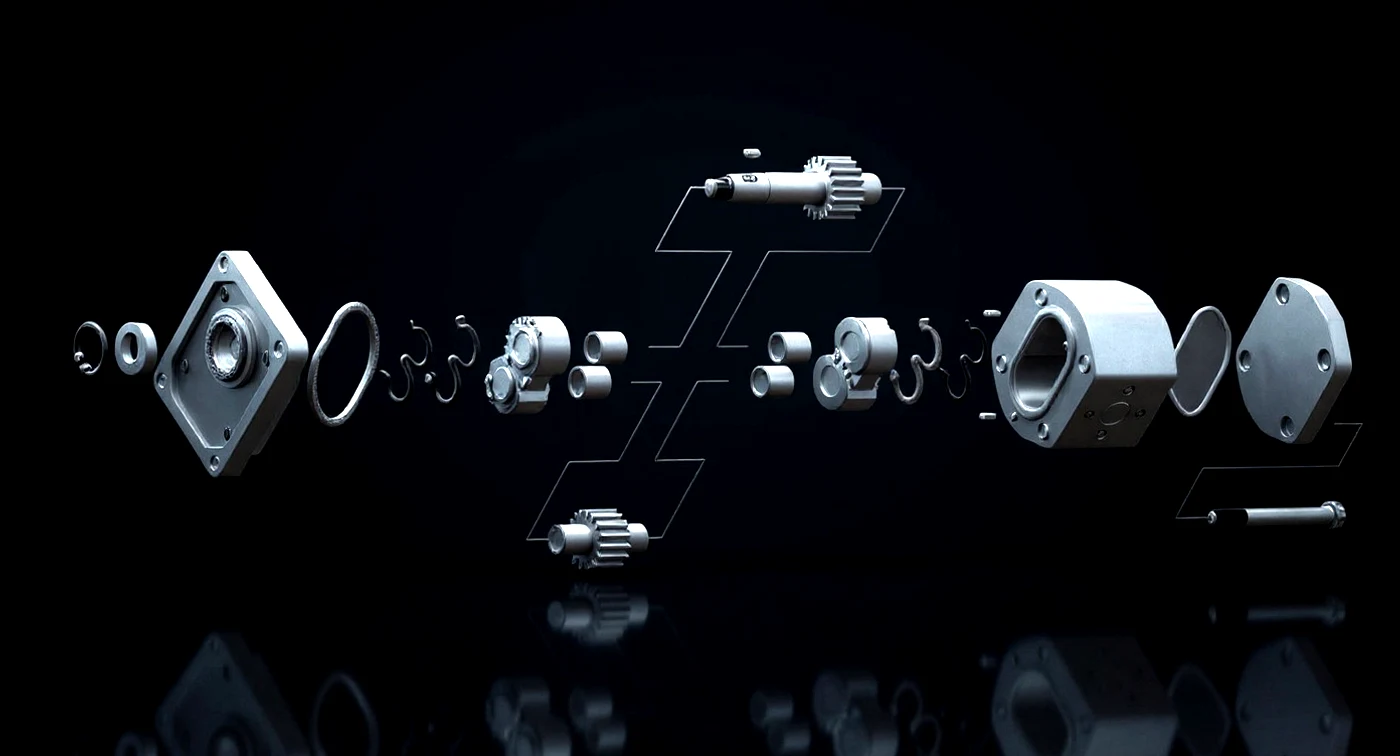
Gear, vane and piston: the three main families. Piston pumps reach higher pressures and efficiencies, vane pumps run quietly, but external gear pumps dominate compact power packs for a simple reason: robustness, dirt tolerance, low cost and a finely graded displacement range that lets you hit exactly the required flow.
Priming and first start
On first start the pump must fill with oil (prime): reservoir full, suction strainer submerged, and a few short unloaded jogs of the motor before applying pressure. If the pump runs dry even briefly, the teeth work without lubrication: it is the fastest way to ruin it. In circuits with the pump above oil level, priming deserves extra care.
How to tell if a pump is worn
The classic symptoms: slower movements for the same command (flow drops as internal leakage grows), rising noise, oil running hotter than usual. The proper check is measuring flow under pressure against the rated value: if the drop is marked, replace the pump: in compact power packs it is an inexpensive component, not worth waiting for a machine stop.